

How to raise your prices
The 4 things that actually move the needle

This piece is a teaser of what we’ll cover in my upcoming cohort of How To Charge More, starting on April 27th. If you’re interested in 2-10x’ing your prices over the next 4 weeks, I encourage you to join our waitlist here.

“I’ve never regretted charging higher prices, but I’ve regretted charging less every time.”
I read that comment from a reader today and it hit home.
We know we should be charging more.
We’ve known it for a long time.
But knowing and doing aren’t the same.
So instead we look at what everyone else charges, go a little lower, throw in some extra value, and call it a day.
Meanwhile, the gap between our prices and what our work is actually worth keeps getting wider.
I want you to understand there’s another way.
My 1:1 clients regularly charge $100-300k per engagement, even in “AI-exposed” fields like web development, design, and consulting.
I’ve also helped hundreds of entrepreneurs to close their first $10k-50k+ deals.
So why are they able to charge so much money?
That’s what I’m going to teach you today.
Learning to advocate for the value of your work will change your life and business.
My client Taylor said it perfectly: “Once I learned how to do it, I never had to worry about making money again.”
So today I’m going to teach you how to raise your prices.
But there’s one big caveat before we get started…
Charging more is just as much an internal game as an external one.
You’ll quickly realize that the reasons you’re not charging more have less to do with how good you are, and more to do with your relationship with yourself.
Let’s get started.
The 4 pillars of price.
There are only four reasons you're not charging more money.
I know that sounds crazy.
But after working with over 500 entrepreneurs (consultants, designers, developers, coaches, agency owners) to help them charge more, I keep seeing the same patterns over and over.
I call them the four pillars of price.
They are:
Your skill (the value you bring to the market)
Your clients (the customer you’re selling to)
Your articulation (your sales and marketing)
Your belief (your self-esteem)
Pillar 1 - Value you create.
Let’s start with the basics.
If you want to charge a lot of money, you need to be good at what you do.
This may come as a shock to some of you, but yes, you must be an expert to charge a ton of money (more on that in Pillar 3).
And when I say “value you create” - I don’t mean your value as a person.
I mean your work’s value in the marketplace.
Don’t even get me started on “Charge what you’re worth.”
Your worth as a human being is infinite.
That has nothing to do with what you charge.
But your work has worth - clear, measurable market value.
And most entrepreneurs have very little clarity about what that value actually is.
They know they’re “good” because they have happy clients and sometimes get referrals.
But if you asked them to explain, in specific terms, the full scope of value they bring to a client engagement (tangible and intangible), they’d struggle.
So step one is awareness.
Get clear on the value you bring to the table.
Clarity of value.
If you don’t understand your work’s value, how will your client?
And before we move on, you need one more thing:
Mastery of value.
The way you continue to increase the value you create over time is by going deeper into your craft.
We gain mastery through practical experience (doing the work) and theoretical experience (studying the work).
But one thing you’ll notice is nobody has just one skill anymore.
It’s 2026, everyone has a stack of skills they bring to the table.
When I was running my design agency, I was probably an 8/10 as a designer.
Not the best in the world.
But I had a bunch of other skills stacked on top of that.
I’m extremely strategic, I’m great at sales, and I’m great at managing relationships.
I can take in a ton of information and distill it down to the one thing that actually matters.
That stack of skills allowed me to charge more than 99% of designers out there.
Because the value I brought wasn’t just design.
It was design + strategy + relationships + judgment.
This is often described as a “T-shaped” skill stack.
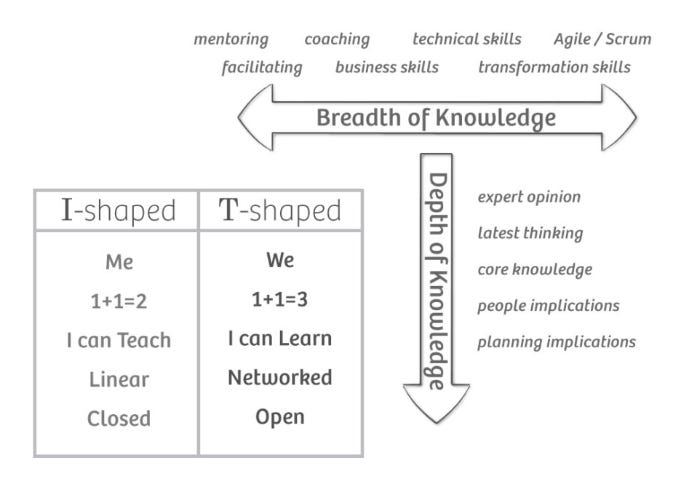
You go deep in one or a few areas, and then go wide in many areas.
This breadth of wisdom amplifies your core skills dramatically.
It’s why when we teach our clients in How To Charge More how to sell, position, and communicate the value of their work, they see outsized returns in their prices.
Because they already have the depth, they just need the right breadth.
Pillar 2 - Value to the client.
Pillar two shouldn’t surprise you:
The simplest way to increase price is to find better clients.
Here’s how I explain it:
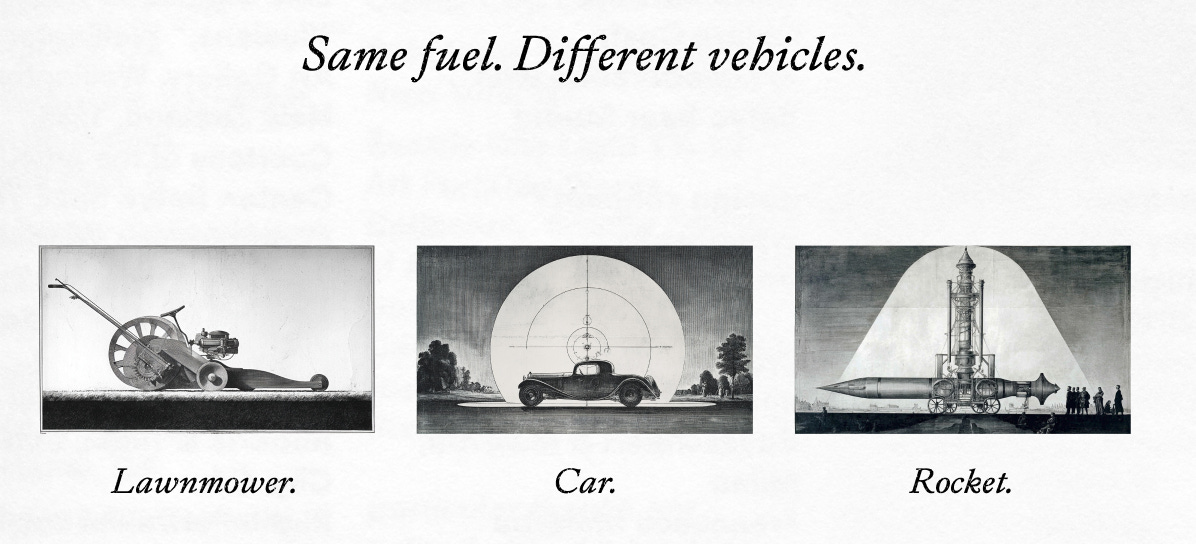
Your skills are like fuel.
You can put that fuel in a lawnmower, and the outcome you get is a mowed lawn.
You can put that same fuel in a car, and the outcome is a drive across the country.
Or you can put it in a rocket ship, and the outcome is a trip to the moon.
Exact same fuel, wildly different outcomes.
Your clients’ businesses are the vehicles.
Your skills are the fuel.
Better clients can get more value from your skills (which means you can charge more money).
I had a conversation with a client recently who runs a branding agency.
He told me his team runs the exact same process whether the project is $10k or $60k.
Same expertise, steps, and quality of work.
The only difference was the size of the client’s business.
So if you’re not charging enough right now, I bet you’re working with a bunch of lawnmowers.
So my question for you is:
Why are you not going after cars or rocket ships?
Now, whenever I tell people this, the first thing they say is:
“Oh, well, I wouldn’t know where to find bigger clients.”
And then they stop. That’s it. End of exploration.
But you’ve just identified the number one constraint in your business!
Don’t give up!
You have a computer. LinkedIn exists. Google exists. AI exists.
You should be spending a massive amount of your discretionary time trying to figure out how to build relationships with these types of clients.
You can figure out how to talk to these clients.
(Or let us teach you in How To Charge More.)
But most people won’t.
They accept the limitation as a fact instead of treating it as the problem to solve.
So yes, this is the simplest way to charge much higher prices: find clients who can get more value from what you already do.
Here’s one red flag to watch for if you want to move up-market:
Stop selling to clients who think they can do what you do.
If the client believes they know how to do what you do, they will not find it as valuable.
Non-experts buy based on value.
Experts buy based on features and data.
Think about it - if someone knows how to change their own oil, they’re going to think the mechanic is ripping them off at $100.
This becomes a big problem if you are in a specific industry.
For example, if you are in the design industry and you are a subcontractor for a bigger design agency, you will have a ceiling for how much you can charge.
But when you step outside that bubble and go where people value your work more, the entire pricing conversation changes.
So just to recap:
Work with bigger clients who value your work.
Pillar 3 - Articulation of the value.
Pillar three is where your value and your client meet.
Articulation is how you tell the story of what happens when you and your client intersect.
Of the value that’s created and the outcomes that happen.
Pricing happens before anyone spends a dollar.
It’s all about perceived value.
And you shape that perception through your positioning, your marketing, and your sales.
Think of it this way:
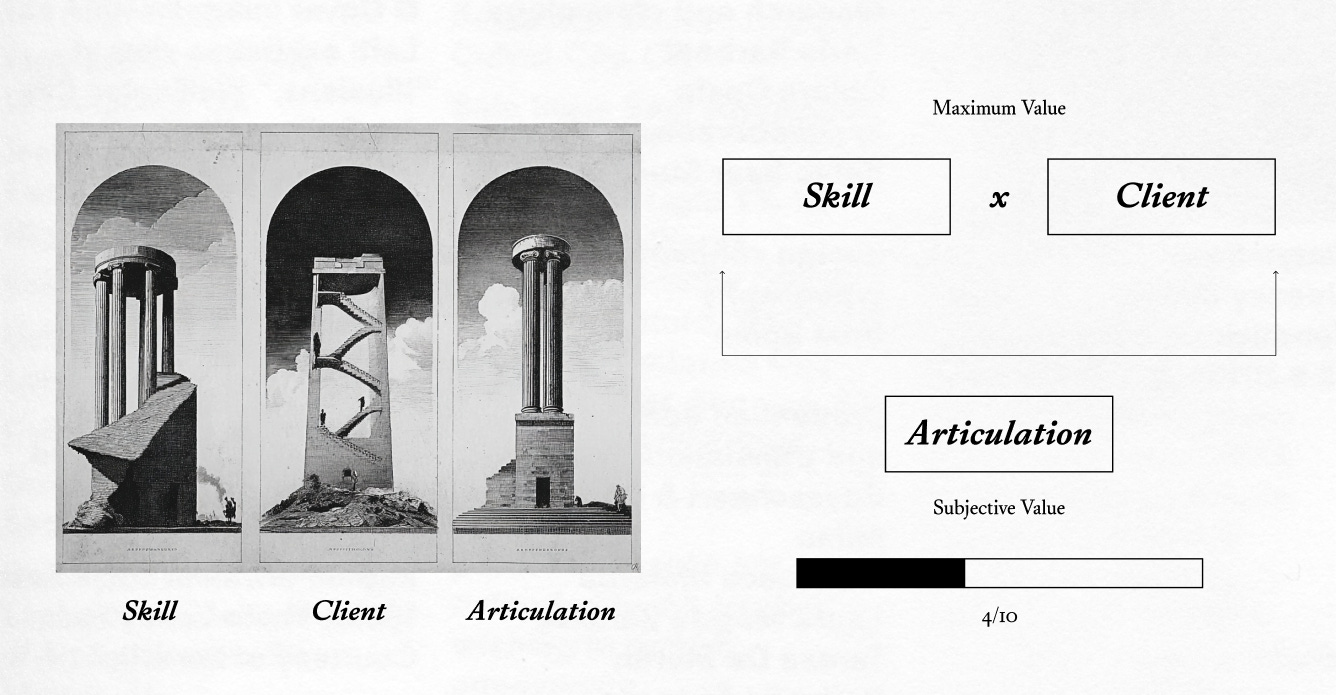
Pillar 1 times Pillar 2 gives you the maximum possible value you could create.
That’s the ceiling.
But your ability to capture that value is limited by how well you can communicate it.
If you’re a 4 out of 10 on articulation, you’re only going to capture 4 out of 10 of your potential value.
So it’s pretty important.
If you want to get started, just follow my articulation guide:

You’re welcome.
Pillar 4: Your conviction in the value.
This is the bottleneck to everything.
Your price reflects your internal conviction in the external value of your work.
It’s your belief that to the right person, your work is valuable.
Here's the thing most people won’t tell you:
Your ability to advocate for your work is directly correlated with your self-esteem.
They’re not the same thing.
But they are connected.
If you have an underlying belief that you’re not good enough, that you’re worthless, or that no one values you - that’s going to leak into how you price.
For many of you, the biggest lever you can pull right now is not a tactic or a strategy.
It’s inner work.
Getting honest about the beliefs running the show.
Beliefs like:
I’m bad with money.
I’m not good enough.
Rich people are bad.
People won’t pay that much.
Who am I to charge that much?
Your beliefs about money, about success, and about your own ability are determining the actions you take in your business.
Whether you realize it or not.
If you believe confrontation is unsafe, you won’t push back in a negotiation.
If you believe rich people are greedy, you’ll unconsciously keep yourself from making too much money.
If you believe you’re the type of person who makes $80k a year, you’ll sabotage every time you start to break through that ceiling.
I guarantee that if your identity was fully aligned with charging more money, you’d already be doing it.
So we have to work at the identity level.
Read more here:


Putting the 4 pillars together.
The four pillars work together.
Skill × Client = the maximum value possible.
Articulation × Conviction = your ability to capture that value.
Most entrepreneurs are sitting on way more value than they’re capturing.
So where do you start?
Ask yourself which of the four pillars needs the most work right now.
Is it your skill? Maybe it’s time to add a complementary skill to your stack instead of going deeper into what you already know.
Is it your clients? Maybe you’re fueling lawnmowers when there are rocket ships out there.
Is it your articulation? Maybe you’re doing expert work but getting paid like an order taker because you don’t know how to communicate what you actually bring.
Is it your conviction? Maybe you know exactly what you should be charging - and you just can’t make yourself say the number.
Start with the weakest pillar.
That’s where the leverage is.
When you pull these four pillars together, here’s what you get:
A high-value, high-price offer.
An offer that represents a dramatic return on investment for the (right) client, and equitable compensation for you.
An offer you’ll feel good marketing, selling, AND fulfilling.
A 2-10x Offer.
(P.S. That’s exactly what we teach you how to do in How To Charge More.)
💸 How To Charge More (Waitlist) 💸
If you’d like to learn how to charge (much) higher prices and advocate for the value of your work, I can help. I teach a live cohort called How To Charge More. Our second cohort starts on April 27th.